MCP and A2A: Protocols of AI Systems 2026
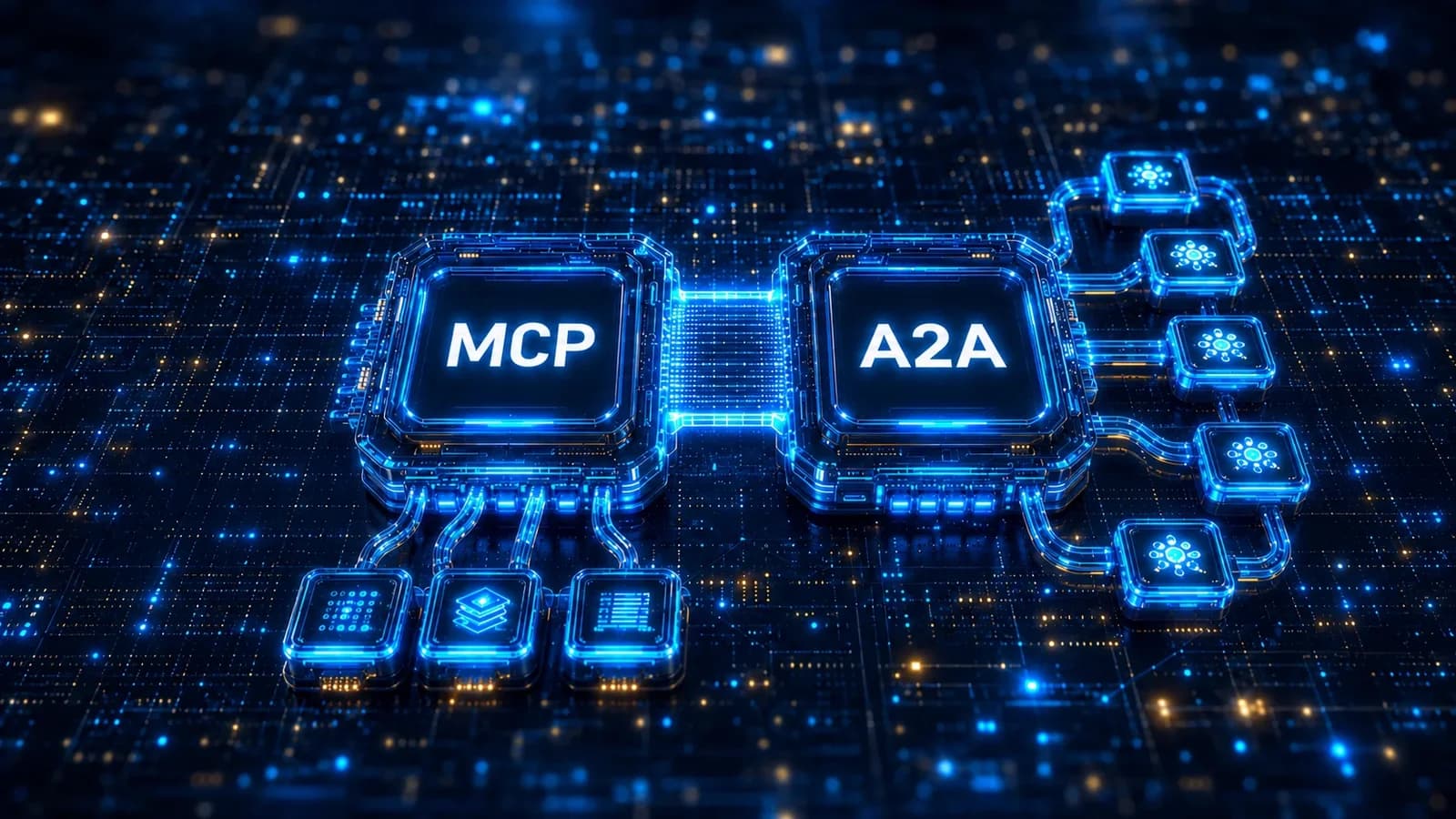
Two connectivity protocols for AI systems under one cover: MCP wires up capabilities and data, A2A links independent agents. It all runs on a Release Review Agent - a real TypeScript project on SDK v2, proven by 14 tests with no API keys.
AI systems in 2026 hold together on two protocols, and they deserve an engineer's read, not a reviewer's. MCP (Model Context Protocol) answers how an application with a model gets data and performs an operation. A2A (Agent2Agent) answers a different question - how one independent agent hands a goal to another and gets a result. These are not two versions of one standard, nor competitors: they close different boundaries and, in a real system, work together.
It all runs on one example - a Release Review Agent. A release coordinator delegates a review to an independent agent over A2A; inside, that agent uses MCP to read a runbook, a CI snapshot, and to call a deterministic readiness check. The example is a real TypeScript project on the current SDK v2: it spins up a live MCP stdio process and a local A2A HTTP server, passes 14 contract tests and two E2E - all without a single API key, because a protocol can and should be proven separately from model quality.
The technical claims are verified against primary sources as of August 1, 2026: the MCP specification revision 2026-07-28, the A2A 1.0 specification, and the official SDKs. From here we walk the whole path - from choosing the minimal contract for a task, to building MCP servers and clients, securing them, then to A2A agents, and finally to a system where MCP runs inside A2A. Every chapter is not a paraphrase of the spec but a breakdown of the engineering decision behind it.