Frontend · Backend · WebXR · AI technologies
About me ↗
The only agent here that never calls a provider: six specialists with a dispatcher run on a model on your own machine. An honest table of graphics-card requirements comes with it - and it is sobering.

An agent from the people behind half the pretty console interfaces takes its context from the same place your editor does - a language server. Configuration is ordinary Bash with its own builtins, and that has a non-obvious security consequence.

The project that invented the repository map and automatic commits before anyone else: instead of files in the context, a concise scheme of the whole codebase with signatures. The ideas spread across the industry; the tool itself has gone a year without a release.

Five products on one engine: a library, a command line, a VS Code extension, a JetBrains plugin and a web board. Project rules are written once and work everywhere - but tool auto-approval in the terminal is on by default, and the front page promises the opposite.
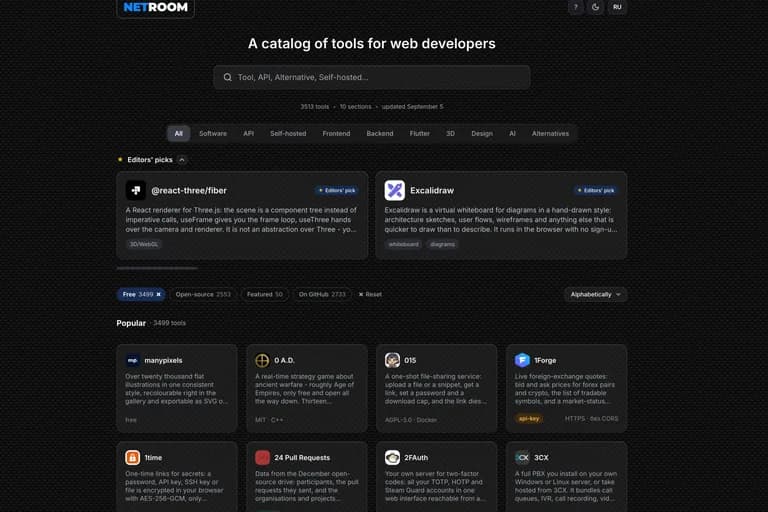
LIVENETROOM is a catalog of tools for web developers that gathers more than three and a half thousand entries across ten sections, from free web services and public APIs to software you run on your own server, React components and AI tools. What ties them together is an instant search that works in the browser itself, without ever calling the server. I built the project together with Claude on Next.js and Payload.
-768x512.webp&w=3840&q=75)
The protocol's official repository holds not a server catalog but seven reference implementations and a warning that these are educational examples, not finished solutions. Thirteen others were archived with no security guarantees, and two of them still appear in the configuration example.
-768x512.webp&w=3840&q=75)
The project calls itself behavioral configuration rather than software: thirty commands and twenty agents exist as Markdown files in your home directory. Structure and a command vocabulary come in exchange for context window, and the documentation names the figure itself.
-768x512.webp&w=3840&q=75)
One Markdown skill set works in six harnesses: adapters build native artifacts for each. The unit of installation is the plugin rather than the skill, and the catalog comes with a rare thing - a table honestly listing what each harness loses.
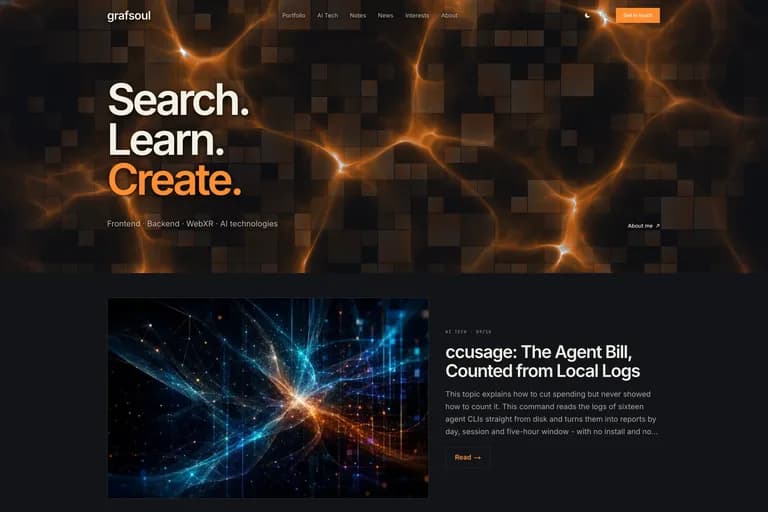
LIVEMy personal site and, at the same time, a bilingual content platform built on Next.js and Payload CMS, home to a portfolio, long-form books, sections about my interests, and a news feed - built together with Claude.
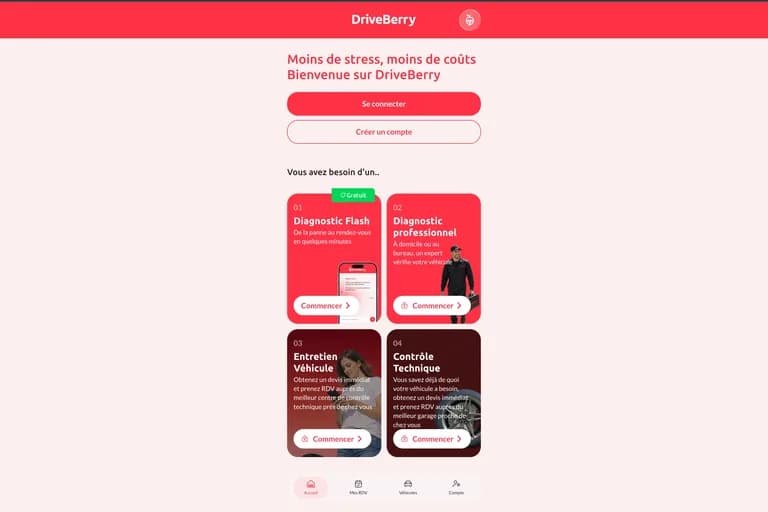
LIVEA car-servicing platform in France: the customer app app.driveberry.ai and a role-based management panel with voice-driven diagnostics, booking, payment and real-time data. My first project built entirely with Claude Opus.