

A Tale of a Tub · 1704
Swift's first major satire, a wild, digressive book that mocks the vanity and squabbles of learning and religion through the tale of three brothers and their father's will. Dazzling and deliberately chaotic, it announced a writer who would spare nothing and no one.
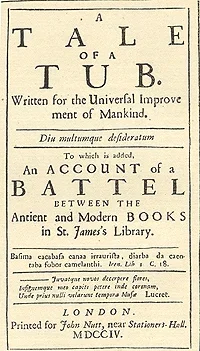
The Battle of the Books · 1704
A short mock-heroic satire, published alongside A Tale of a Tub, that stages a literal battle in a library between the ancient authors and the modern ones. Swift's witty answer to a real quarrel of his age about whether the old masters or the new were the greater.
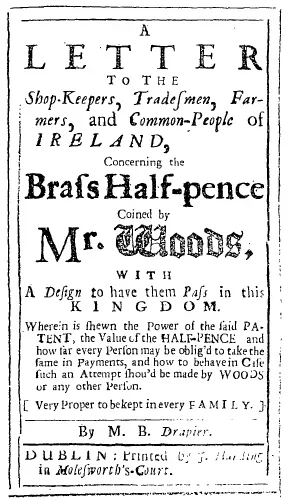
The Drapier's Letters · 1724
A series of pamphlets Swift wrote in the guise of a modest Dublin draper, rousing Ireland against a corrupt scheme to flood the country with debased coin. Plain, fearless and hugely effective - political writing that actually changed the course of events.